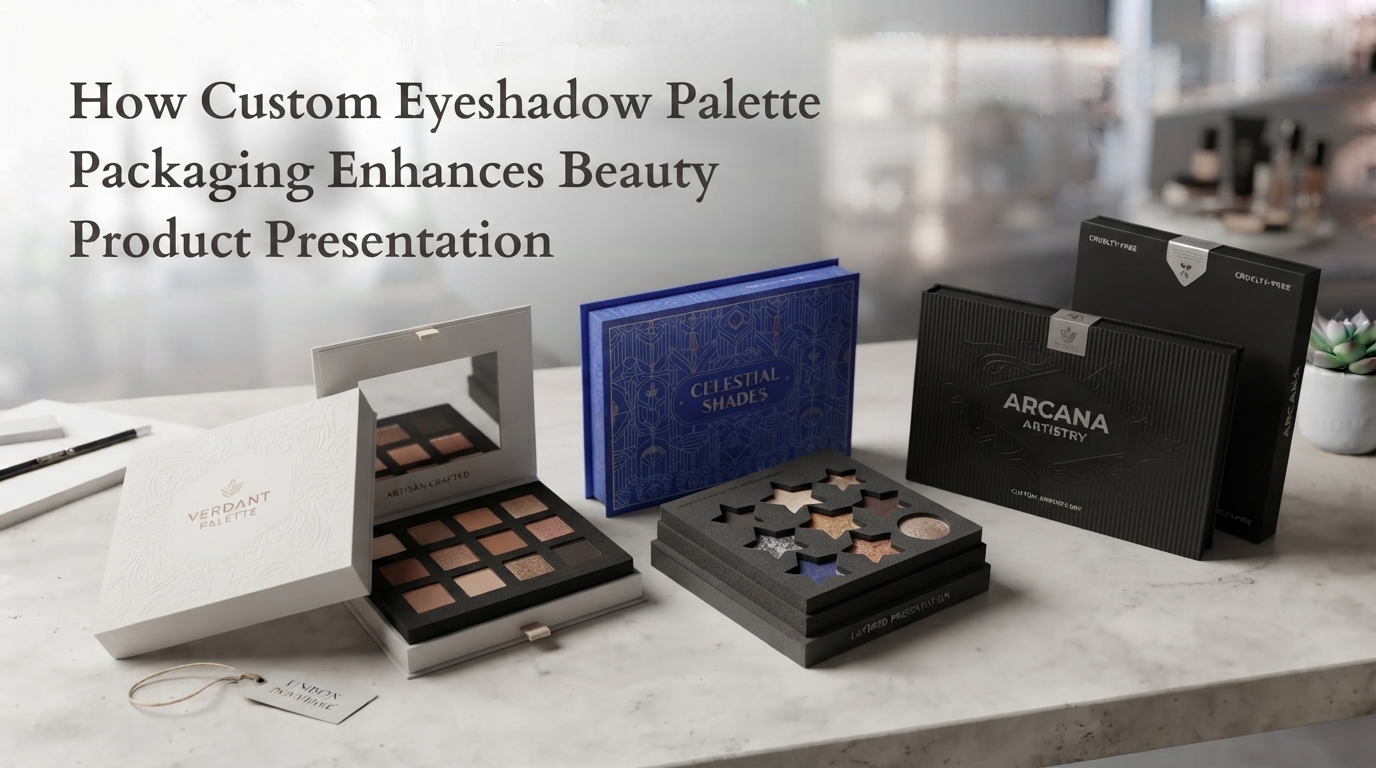
In the beauty industry, packaging is often the first physical interaction customers have with a product. Before trying an eyeshadow palette, shoppers may form an impression based on its colors, artwork, typography, structure, and overall presentation.

For cosmetic brands, this makes packaging an important part of product positioning. A well-designed package can protect the palette, organize the product, communicate the brand identity, and create a memorable unboxing experience.
Brands developing packaging around their specific products can use Branded Packaging Boxes to create a presentation that aligns with their product dimensions, visual identity, and customer experience.
Why Eyeshadow Packaging Matters
Eyeshadow palettes come in many configurations. Some contain a few shades, while others include large collections of colors, finishes, applicators, mirrors, or other accessories.
Because of these variations, packaging should be designed around the actual product rather than relying on a generic format.
Effective packaging can help:
- Protect the palette during transportation
- Keep the product properly positioned
- Communicate the brand identity
- Present colors and product details clearly
- Support a premium unboxing experience
- Organize additional components
- Create consistency across a cosmetic collection
For online beauty businesses, the package can be especially important because it becomes part of the customer’s first physical experience with the brand.
What Makes Eyeshadow Palette Packaging Unique?
Eyeshadow palettes can have distinctive dimensions and layouts.
A palette may be compact and rectangular, oversized with numerous shades, or designed in an unusual shape to support a particular collection concept.
Packaging may therefore need to accommodate:
- Palette dimensions
- Product thickness
- Number of shades
- Applicators
- Mirrors
- Promotional inserts
- Product information
- Protective requirements
The packaging should provide enough room for the product while avoiding unnecessary empty space.
Building a Consistent Cosmetic Brand
A beauty brand’s packaging can help establish visual consistency across its product line.
For example, a company selling eyeshadow palettes, lip products, skincare, and brushes may use a coordinated design language across each package.
This could involve:
- Consistent typography
- Brand colors
- Logo placement
- Graphic elements
- Patterns
- Photography
- Finishing techniques
Businesses looking for a broader beauty packaging approach can explore branded custom beauty product box solutions that can be developed around different cosmetic products.
A consistent system allows individual products to have their own designs while still being recognizable as part of the same brand.
Designing Around the Eyeshadow Palette
The first step in packaging development is understanding the product itself.
Brands should measure the palette’s:
- Length
- Width
- Height
- Weight
Additional components should also be considered.
If the palette includes an applicator, mirror, booklet, or other accessory, those elements should be included when determining the required interior space.
Accurate measurements can help create a package that feels appropriately sized and provides a more organized presentation.
Protecting the Palette
Eyeshadow palettes may contain powders, pressed pigments, mirrors, and other components that require careful handling.
The packaging structure should therefore be considered in relation to the product’s distribution environment.
An appropriately fitted interior can help limit unnecessary movement during transportation.
Depending on the product and packaging specifications, inserts made from materials such as paperboard, cardboard, or foam may be considered.
The appropriate solution depends on the palette’s construction, weight, fragility, and shipping requirements.
Creating an Attractive Product Reveal
The unboxing experience can influence how customers perceive a beauty product.
A carefully planned package can create a sequence that introduces the brand before revealing the palette.
For example:
Exterior design → box opening → interior branding → palette reveal → product information
This sequence can make the package feel more intentional.
For an custom eyeshadow palette packaging, the product itself is highly visual, so the packaging should support rather than compete with its appearance.
Printing and Branding Options
Packaging provides cosmetic brands with a large surface for visual communication.
Depending on the packaging design, brands can incorporate:
- Logos
- Palette names
- Shade information
- Collection names
- Brand messaging
- Patterns
- Illustrations
- Product details
Interior printing can also extend the brand experience after the package has been opened.
A beauty brand might use the interior lid for a campaign message, color story, brand statement, or simple decorative design.
The amount of information should be carefully controlled so that customers can quickly understand the product without the package becoming visually crowded.
Using Color Strategically
Color is particularly important for eyeshadow products.
The palette itself may contain multiple shades, meaning the packaging design needs to work alongside the product’s color story.
A neutral eyeshadow collection may use muted packaging, while a bright seasonal collection might incorporate more energetic colors.
The packaging does not necessarily need to match every shade inside the palette. Instead, it can reinforce the overall concept of the collection.
A consistent color strategy can also help customers recognize different collections within the same brand.
Premium Finishing for Eyeshadow Boxes
Finishing techniques can help emphasize selected parts of a cosmetic package.
Depending on the project, brands may consider:
Foil Details
Foil can draw attention to the brand name, palette title, or selected graphic elements.
Embossing
Embossing creates raised areas that can add a tactile dimension to logos or patterns.
Debossing
Debossing creates recessed details that can provide a subtle premium effect.
Matte Finishing
Matte surfaces can support minimalist and sophisticated cosmetic designs.
Gloss Finishing
Gloss can add visual contrast and make certain areas more prominent.
Soft-Touch Finishing
A soft-touch surface can add a smoother tactile quality to the packaging.
Spot UV
Spot UV can create selective glossy details against a contrasting surface.
The best approach depends on the brand’s design direction and budget. More finishing does not automatically create better packaging.
Packaging for Different Eyeshadow Collections
Neutral Palettes
Neutral palettes can use clean typography, soft colors, and minimalist graphics to create a refined presentation.
Bold Color Collections
Bright palettes may benefit from expressive artwork and stronger visual contrasts.
Limited Editions
Limited-edition collections can use unique packaging artwork to distinguish the product from a brand’s regular line.
Seasonal Collections
Holiday, summer, or other seasonal releases can use packaging that reflects the theme without losing connection to the overall brand identity.
Professional Makeup Products
Professional palettes may prioritize organization, clear product identification, and practical packaging while maintaining a polished appearance.
The Role of Inserts
An insert can help keep the palette positioned correctly inside the box.
It may also provide designated areas for:
- Applicators
- Product cards
- Instructions
- Promotional materials
- Multiple palettes
For gift sets or larger beauty kits, an organized insert can make the package much easier to unpack.
The insert can also contribute to the overall presentation by creating a structured layout around the main product.
Eyeshadow Packaging for Ecommerce
Beauty ecommerce depends heavily on visual presentation.
Customers often discover products through social media, online advertisements, product photography, and influencer content before making a purchase.
When the product arrives, the packaging becomes a physical continuation of that digital experience.
A branded package can help connect the colors, typography, and visual identity customers saw online with the physical product in their hands.
This can be especially valuable for smaller beauty brands that want to create a recognizable customer experience across different channels.
Sustainability Considerations
Beauty brands are increasingly considering sustainability when selecting packaging.
Eyeshadow packaging can be evaluated in terms of:
- Material selection
- Box size
- Recyclability
- Insert materials
- Reusability
- Overall material usage
Right-sizing the package can help avoid unnecessary empty space.
At the same time, sustainability should be considered alongside product protection. A package that does not adequately protect a palette may result in damaged products and unnecessary waste.
Common Eyeshadow Packaging Mistakes
Using a Generic Box Size
Different palettes may require different dimensions. A universal package may not provide the best fit.
Ignoring Accessories
Mirrors, applicators, booklets, and other components need to be considered during the design stage.
Overloading the Artwork
Too many colors, graphics, and messages can make the packaging difficult to understand.
Forgetting the Interior
The inside of the package contributes to the overall unboxing experience.
Poor Product Fit
Excessive empty space or an overly tight fit can negatively affect presentation and practicality.
Choosing Finishes Without a Strategy
Premium finishing should reinforce the design rather than simply add decoration.
How to Plan Eyeshadow Palette Packaging
A structured process can make the development process more efficient.
1. Measure the palette.
Record the complete dimensions and weight.
2. Identify additional components.
Include applicators, mirrors, cards, booklets, or other items.
3. Define the collection concept.
Determine the visual story and intended customer.
4. Select the packaging structure.
Choose a format that supports the product and desired opening experience.
5. Plan the insert.
Determine whether additional internal support or organization is required.
6. Develop the artwork.
Use the brand identity and palette concept to guide the design.
7. Select finishing details.
Choose appropriate printing and finishing treatments.
8. Consider distribution.
Review storage, fulfillment, shipping, and product protection requirements.
9. Review a sample where appropriate.
A prototype can help identify dimensional and presentation issues before larger production.
Frequently Asked Questions
1. Why is packaging important for eyeshadow palettes?
Packaging protects the palette, organizes the product, communicates the brand identity, and creates an opportunity for a memorable customer experience.
2. Can eyeshadow packaging be customized?
Yes. Depending on the project, brands can customize dimensions, artwork, printing, inserts, finishing, and other packaging elements.
3. Can custom inserts be used for eyeshadow palettes?
Yes. Inserts can help position palettes and organize accessories such as applicators, cards, or other components.
4. What finishes work well for cosmetic packaging?
Depending on the desired appearance, brands can consider matte, gloss, soft-touch, foil, embossing, debossing, and Spot UV finishes.
5. How should a brand choose the right eyeshadow box?
The box should be selected based on the palette’s dimensions, weight, accessories, protection requirements, presentation goals, production quantity, and budget.
Conclusion
Eyeshadow palette packaging can play an important role in both product protection and beauty branding. Because palettes are highly visual products, the package should complement the product while creating a consistent and engaging experience.
From dimensions and inserts to artwork, color, printing, and finishing, each decision can contribute to the final presentation.
For ecommerce beauty brands, packaging also provides an opportunity to connect the digital shopping experience with the physical product. A thoughtfully designed box can reinforce the brand customers discovered online and make the arrival of the product feel more intentional.
The strongest approach is to begin with the actual palette and its requirements, then build the structure and visual identity around it. When function and design work together, cosmetic packaging can support both practical distribution and stronger brand presentation.