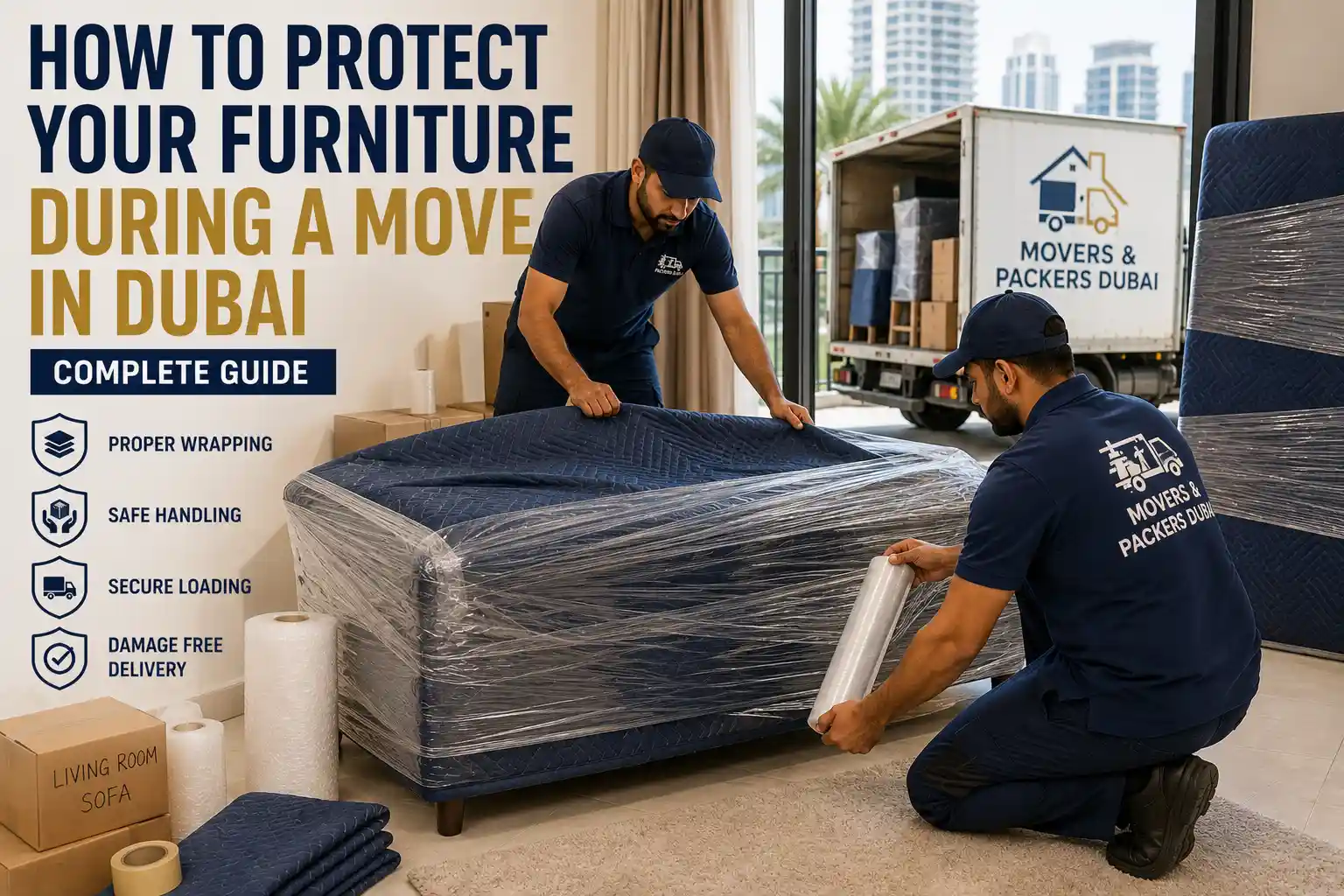
Furniture is often the most expensive and difficult part of a household move.

A few cardboard boxes can be replaced if something goes wrong, but a damaged sofa, scratched dining table, broken glass cabinet or dented wardrobe can be expensive to repair or replace. This is why furniture protection should be treated as an important part of moving rather than something that happens automatically when furniture is loaded into a truck.
Moving furniture safely requires planning from the moment each item is removed from its current position until it is placed inside the new property.
This becomes especially important in Dubai, where residential moves can involve high rise buildings, service elevators, narrow corridors, underground parking areas, gated communities, stairs and long loading routes. Each part of the journey creates its own handling challenges.
Whether you are moving between apartments in Dubai Marina, relocating a family home in Mirdif, moving into a villa in Arabian Ranches or shifting furniture to another residential community, proper preparation can significantly reduce the risk of damage.
Professional Movers and Packers in Dubai can handle furniture wrapping, loading, transportation, unloading and placement, but understanding the process yourself helps you make better decisions before moving day.
Why Furniture Protection Matters During a Move
Furniture is exposed to several different risks during relocation.
A piece may be scratched while being moved through a doorway, damaged while passing through an elevator, knocked against a wall in a hallway or affected by poor positioning inside the moving vehicle.
Common furniture problems during relocation include:
- Scratched wooden surfaces
- Dented corners
- Broken glass
- Torn upholstery
- Damaged cabinet doors
- Scratched polished surfaces
- Broken legs
- Loose fittings
- Cracked mirrors
- Water or dust exposure
- Damage caused by improper lifting
The good news is that many of these problems can be prevented through proper preparation.
Furniture protection is not only about wrapping.
It involves assessing the furniture, preparing the access route, selecting suitable protective materials, using correct lifting methods and securing everything properly during transportation.
Which Furniture Needs the Most Protection?
Not every piece of furniture requires exactly the same treatment.
Different materials respond differently to movement and pressure.
Some of the items that deserve particular attention include:
- Glass dining tables
- Glass cabinets
- Large mirrors
- Wooden wardrobes
- Polished dining tables
- Leather sofas
- Fabric sofas
- Beds
- TV units
- Antique furniture
- Office desks
- Bookshelves
- Display cabinets
The larger and more delicate the item, the more important proper preparation becomes.
Start With a Furniture Inventory
Before moving day, create a list of your major furniture pieces.
Walk through each room and record what needs to be transported.
Living Room
Include:
- Sofa
- Armchairs
- Coffee table
- TV unit
- Side tables
- Display cabinet
- Bookshelves
Dining Room
Include:
- Dining table
- Dining chairs
- Sideboard
- Display cabinet
- Bar furniture
Bedrooms
Include:
- Beds
- Wardrobes
- Dressing tables
- Bedside tables
- Chests of drawers
- Mirrors
Home Office
Include:
- Desk
- Office chair
- Filing cabinet
- Bookshelves
- Storage units
This inventory gives you a clear picture of the furniture volume and helps identify which items require special handling.
Inspect Furniture Before Packing
Do not wait until after the move to discover that a table already had a scratch.
Inspect important furniture before it is wrapped.
Look at:
- Corners
- Tabletops
- Doors
- Drawers
- Glass panels
- Legs
- Handles
- Upholstery
- Decorative surfaces
For expensive furniture, taking photographs before the move can also provide a useful record of its condition.
Photograph the front, sides and important surfaces.
This is particularly useful when moving valuable or delicate furniture.
Clean Furniture Before Wrapping It
Dust and dirt trapped between furniture and protective material can sometimes cause surface scratches.
Clean suitable surfaces before wrapping.
For example, wipe down:
- Wooden tables
- Cabinets
- Shelves
- TV units
- Wardrobes
- Bed frames
Allow surfaces to dry before applying protective materials.
Do not use cleaning products that could damage the furniture finish.
Use the Right Furniture Protection Materials
Different pieces require different protection.
Common moving materials include:
- Moving blankets
- Bubble wrap
- Stretch film
- Furniture pads
- Corner protectors
- Protective sheets
- Cardboard
- Tape
- Mattress covers
A moving blanket can protect a large wooden surface from scratches.
Bubble wrap can provide additional cushioning around delicate sections.
Stretch film can help hold protective material in place.
Corner protectors can reduce the risk of damage to sharp edges.
Do Not Wrap Every Furniture Material the Same Way
A common mistake is assuming that one wrapping method works for everything.
It does not.
A wooden table, leather sofa and glass cabinet have different protection requirements.
Wooden Furniture
Wooden furniture can be vulnerable to scratches, dents and impact damage.
Use appropriate padding around:
- Corners
- Edges
- Table legs
- Drawers
- Decorative surfaces
Do not allow metal tools or other hard objects to come into direct contact with polished wood.
Glass Furniture
Glass requires additional cushioning and careful handling.
Protect:
- Glass edges
- Corners
- Entire surfaces
Never place heavy furniture on top of fragile glass.
Leather Furniture
Leather can be scratched or marked by rough materials.
Use clean protective covers and avoid dragging leather sofas across floors.
Fabric Furniture
Fabric sofas and chairs should be protected against dust, dirt and friction.
Suitable furniture covers or blankets can help keep upholstery clean during the move.
How to Protect a Sofa During a Move
Sofas are among the largest pieces of furniture in most homes.
They can also be difficult to maneuver through doorways and elevators.
Before moving a sofa:
- Remove cushions
- Remove detachable legs where appropriate
- Check the access route
- Protect the upholstery
- Protect corners
- Measure narrow doorways if necessary
- Plan the lifting position
Wrap the sofa with suitable protective material.
Pay particular attention to corners because they are frequently exposed to contact with walls and door frames.
Measure the Sofa and the Access Route
A sofa may fit comfortably inside a living room but still be difficult to remove through the entrance.
Measure:
- Sofa width
- Sofa height
- Door width
- Hallway width
- Elevator door
- Staircase width
Also consider turning points.
Sometimes the issue is not the width of a doorway but the amount of space available to rotate the furniture.
Protect the Sofa From Dirty Surfaces
Do not allow upholstered furniture to come into unnecessary contact with dirty floors, vehicle surfaces or dusty areas.
A clean protective layer should remain around the sofa until it reaches the new property.
How to Protect a Wooden Dining Table
Dining tables often have large polished surfaces that can be scratched easily.
Before moving one:
- Remove loose items
- Remove detachable legs if appropriate
- Protect the tabletop
- Wrap the edges
- Protect the corners
- Secure detachable components
Never place sharp objects directly against the tabletop.
If the table has a glass top, handle the glass separately according to its design and construction.
Protect Dining Chairs
Dining chairs may appear simple to move, but their legs and upholstery can become damaged when several chairs are stacked or transported together.
Protect:
- Legs
- Armrests
- Upholstery
- Decorative surfaces
Avoid stacking chairs in a way that puts pressure on delicate parts.
How to Move a Wardrobe Safely
Wardrobes can be among the most difficult furniture pieces to transport.
Before moving:
- Empty the wardrobe
- Remove clothes
- Empty drawers
- Remove loose shelves
- Secure doors
- Protect mirrors
- Determine whether disassembly is necessary
Large wardrobes may need to be dismantled to safely pass through narrow corridors, doorways or elevators.
Keep Wardrobe Hardware Together
When furniture is disassembled, screws, bolts and fittings can easily become separated.
Keep small hardware in a labeled bag.
The label should identify the furniture piece.
For example:
Master Bedroom Wardrobe
Guest Room Bed
Dining Table
This makes reassembly much easier.
Protect Mirrors and Glass Panels
Glass is one of the most fragile materials found in household furniture.
Examples include:
- Wardrobe mirrors
- Glass cabinet doors
- Display shelves
- Glass dining tables
- Large wall mirrors
- Decorative glass panels
Protect glass individually.
Avoid placing pressure on the center of large glass surfaces.
The edges and corners require particular attention.
Do Not Put Heavy Items on Fragile Furniture
A common loading mistake is placing boxes or equipment on top of furniture simply because there is available space.
Do not place heavy cartons on:
- Glass tables
- Delicate cabinets
- Fragile shelves
- Upholstered furniture
- Decorative surfaces
Weight can cause cracking, bending or permanent damage.
Protect Furniture Corners
Corners are among the most exposed parts of furniture during transportation.
They can hit:
- Door frames
- Walls
- Elevator entrances
- Stair railings
- Other furniture
- Truck walls
Use suitable padding around exposed corners.
This is particularly important for:
- Tables
- Cabinets
- Desks
- TV units
- Wooden wardrobes
Protect the Property While Moving Furniture
Furniture protection is not only about protecting furniture.
Your property also needs protection.
Large furniture can damage:
- Walls
- Floors
- Door frames
- Elevators
- Staircases
- Handrails
Use appropriate protective materials where required.
This becomes particularly important in rented properties where damage to walls or common areas can result in additional repair costs.
Protect Elevator Interiors
High rise apartment moves often involve service elevators.
The elevator itself should be considered part of the moving route.
Large furniture should be handled carefully when entering and leaving the elevator.
Avoid allowing:
- Table corners
- Metal furniture legs
- Cabinet edges
- Sharp objects
to hit elevator walls.
Building management may also have specific requirements for protecting common areas during a move.
Plan the Route Before Moving Large Furniture
Do not start carrying the largest furniture piece before deciding how it will travel through the property.
Walk the route first.
Identify:
- Doorways
- Hallways
- Stairs
- Elevators
- Turning points
- Narrow sections
- Outdoor routes
If something looks difficult, solve the problem before the furniture is lifted.
This can save time and reduce the risk of injury or property damage.
Moving Furniture Through Narrow Doorways
A large piece may require a different angle to pass through a doorway.
Sometimes rotating the furniture allows it to pass safely.
However, forcing furniture through a narrow opening can damage both the furniture and the property.
If an item cannot safely pass through the doorway, consider whether partial disassembly is appropriate.
When Furniture Should Be Disassembled
Furniture does not always need to be dismantled.
Disassembly may be appropriate when:
- The item is very large
- The doorway is narrow
- The staircase is tight
- The elevator is small
- The furniture has removable sections
- The item can be safely reassembled
Common examples include:
- Beds
- Wardrobes
- Dining tables
- Desks
- Shelving units
- Large cabinets
Do not dismantle complicated furniture unless you know how it should be reassembled.
Take Photos Before Disassembly
If furniture needs to be dismantled, take photographs first.
Photograph:
- Connections
- Hinges
- Brackets
- Cable arrangements
- Shelf positions
This can make reassembly easier.
Keep all hardware together.
Protect Furniture During Loading
Loading is one of the most important stages of the relocation.
Even perfectly wrapped furniture can be damaged if it is loaded incorrectly.
Furniture should be positioned securely inside the vehicle.
Heavy pieces should not be allowed to shift during transportation.
Fragile pieces should have sufficient separation from hard surfaces and other heavy objects.
Secure Furniture Inside the Moving Truck
The moving vehicle may experience:
- Acceleration
- Braking
- Turning
- Uneven road surfaces
Furniture that is not secured can shift.
Movement inside the truck can result in scratches, dents or broken components.
Use appropriate securing methods and arrange furniture according to its size, weight and fragility.
Do Not Overload the Vehicle
Overloading can create several problems.
It can make loading disorganized.
It can increase pressure between furniture pieces.
It can make unloading more difficult.
It may also increase the risk of items shifting during transportation.
The vehicle should be loaded according to the moving volume and appropriate weight limits.
Protect Furniture During Hot Weather
Dubai’s climate creates an additional consideration during relocation.
Furniture should not be unnecessarily exposed to direct heat or sunlight during loading and unloading.
Keep the time between loading and transportation as efficient as possible.
Certain materials may respond poorly to excessive heat.
Leather, wood finishes, adhesives and some decorative materials can be sensitive to environmental conditions.
Be Careful With Antique Furniture
Antique furniture deserves additional attention.
It may have:
- Delicate finishes
- Older joints
- Decorative carvings
- Fragile glass
- Original hardware
- Unusual construction
Do not assume that an antique piece can be moved like a modern cabinet.
Assess its condition first.
If it has significant monetary or sentimental value, discuss its handling requirements before moving day.
Protect Electronics Attached to Furniture
Furniture may contain or support electronics.
Examples include:
- TV units
- Entertainment cabinets
- Computer desks
- Gaming setups
- Speaker stands
Disconnect electronics before furniture is moved.
Do not allow cables to hang loose where they can become caught or damaged.
Keep electronics and furniture components organized.
Protect Drawers and Cabinet Doors
Drawers can slide open during transportation.
Cabinet doors can swing or become damaged.
Empty drawers before moving.
Secure doors and drawers using suitable methods that do not damage the furniture finish.
Do not place excessive pressure on handles.
Protect Mattress and Bed Components
Mattresses should be covered before transportation.
Keep them away from dirty floors.
Protect them from dust and moisture.
Bed frames should be dismantled only where appropriate.
Keep screws and fittings together.
If the bed has a complicated structure, photograph the connections before taking it apart.
Protect Outdoor Furniture
Villa and townhouse moves may include outdoor furniture.
Examples include:
- Garden tables
- Outdoor chairs
- Loungers
- Benches
- Storage boxes
- Umbrellas
Clean outdoor furniture before moving it indoors or into the truck.
Separate cushions.
Protect delicate surfaces.
Check whether any item can be safely dismantled.
Moving Furniture From a High Rise Apartment
High rise moves require additional planning.
Before moving day, confirm:
- Service elevator availability
- Building access
- Moving hours
- Loading zone
- Parking
- Security requirements
The current residential moving service explains that Dubai apartment moves often require coordination around service elevators, building rules and limited moving windows.
This is one reason why furniture moving in a high rise should be planned before the movers arrive.
Moving Furniture Into a Villa
Villa furniture moves can present different challenges.
There may be:
- Multiple floors
- Staircases
- Large entrances
- Garden areas
- Garages
- Outdoor furniture
- Larger rooms
The route should be planned according to the size of the furniture and the layout of the property.
Do not assume that a large villa automatically means every furniture piece will be easy to move.
Staircases and turning points can still create challenges.
Moving Furniture Between Emirates
Furniture may also need to travel from Dubai to another emirate.
Longer transportation distances make secure loading even more important.
Furniture should be protected against movement during the entire journey.
If you are relocating from Dubai to Abu Dhabi, Sharjah, Ajman or another emirate, discuss the complete route and furniture requirements before booking.
How Professional Furniture Movers Handle Large Items
Experienced furniture movers generally approach large items systematically.
The process can include:
- Inspecting the furniture
- Assessing the access route
- Removing loose components
- Disassembling where appropriate
- Wrapping surfaces
- Protecting corners
- Carrying the furniture safely
- Loading it securely
- Transporting it
- Unloading it carefully
- Reassembling it where required
- Placing it according to the customer’s instructions
The professional furniture moving service in Dubai offered by Movers and Packers Dubai specifically covers packing, dismantling, transportation and reinstallation for household and office furniture.
When You Should Hire Furniture Movers
Professional assistance can make sense when:
- Furniture is very heavy
- Furniture is expensive
- Items are fragile
- Access is difficult
- You live in a high rise
- You have multiple large wardrobes
- You have glass furniture
- You are moving an entire home
- You do not have suitable lifting equipment
- You need furniture assembled at the destination
Trying to move a very heavy wardrobe or large glass table without suitable equipment can create unnecessary risk.
How to Choose a Furniture Moving Company
Do not select a company based only on the lowest quotation.
Ask about:
- Furniture wrapping
- Moving blankets
- Disassembly
- Reassembly
- Loading
- Transportation
- Unloading
- Furniture placement
- Fragile item handling
- Building coordination
- Insurance
- Written pricing
A company that clearly explains its process is generally easier to work with.
The main Movers and Packers service in Dubai describes furniture wrapping, careful loading, disassembly and reassembly as part of its moving process.
Why a Written Quote Is Important
Furniture moving requirements vary considerably.
Moving one sofa is very different from moving an entire villa.
A written quotation should clearly identify the expected scope.
Ask whether the price includes:
- Labour
- Packing
- Wrapping
- Transportation
- Disassembly
- Reassembly
- Loading
- Unloading
A clear quotation reduces misunderstandings on moving day.
Furniture Protection Checklist
Before the movers arrive, check the following.
Wooden Furniture
- Surfaces cleaned
- Corners protected
- Drawers emptied
- Doors secured
- Removable parts identified
Glass Furniture
- Glass surfaces protected
- Edges cushioned
- Separate handling arranged
- No heavy items placed on top
Sofas
- Cushions removed
- Upholstery covered
- Corners protected
- Legs removed where appropriate
Wardrobes
- Contents removed
- Shelves removed where necessary
- Doors secured
- Mirrors protected
- Hardware labeled
Beds
- Bedding removed
- Mattress protected
- Frame assessed
- Hardware secured
Office Furniture
- Drawers emptied
- Electronics disconnected
- Cables labeled
- Glass surfaces protected
What to Do After Furniture Arrives
Protection should remain in place until furniture reaches its intended position.
Do not immediately remove every blanket and protective layer.
First:
- Confirm the furniture is in the correct room
- Check access around it
- Position it correctly
- Reassemble components
- Inspect visible surfaces
Once the furniture is positioned, remove protective material carefully.
Inspect Furniture Before the Movers Leave
A final walkthrough is important.
Check:
- Sofas
- Tables
- Chairs
- Wardrobes
- Beds
- Cabinets
- Mirrors
- Glass furniture
- Office furniture
Look at corners and polished surfaces.
If something appears different from its original condition, raise it immediately with the moving team.
Do Not Rush the Final Placement
Furniture placement can affect the entire room.
Before the movers leave, make sure large pieces are positioned where you want them.
It is much easier to move a wardrobe into the correct location immediately than after the room has been filled with boxes.
Common Furniture Moving Mistakes
Dragging Furniture Across Floors
Dragging can damage both the furniture and the floor.
Carrying Large Furniture Without a Route Plan
This increases the risk of hitting walls and door frames.
Using Too Little Protection
Large furniture needs proper coverage, not just a thin plastic sheet.
Leaving Drawers Full
Heavy drawers can make furniture difficult to carry and can damage internal mechanisms.
Mixing Hardware
Loose screws and fittings can easily disappear.
Ignoring Glass Components
Glass requires separate attention.
Overloading the Moving Vehicle
Too much pressure between furniture pieces can cause damage.
Failing to Secure Furniture
Items can shift during transportation.
Forgetting Building Access
A perfectly packed sofa is useless if it cannot reach the service elevator.
Choosing Movers Based Only on Price
Cheap handling can become expensive when furniture is damaged.
How to Make Furniture Moving Easier
The best furniture moves usually start before moving day.
Inspect your furniture.
Measure difficult access points.
Decide what needs disassembly.
Prepare protective materials.
Arrange building access.
Plan the loading route.
Tell the movers about fragile or unusually large pieces.
Prepare the destination rooms.
This preparation allows the actual moving process to happen with fewer interruptions.
Residential Furniture Moves Need Proper Planning
Furniture is usually the largest component of a household relocation.
For apartments and townhouses, access restrictions can be just as important as the furniture itself.
The residential moving services in Dubai offered by Movers and Packers Dubai include furniture handling, packing materials, loading, transportation, unloading and furniture placement.
This can be particularly useful when your move involves multiple bedrooms, large wardrobes, sofas, dining furniture and household appliances.
Final Thoughts
Furniture protection should never be treated as an afterthought.
A successful move is not simply about getting everything from one address to another.
The furniture needs to arrive in the same condition in which it left.
That requires proper wrapping, suitable lifting methods, careful loading, secure transportation and controlled unloading.
Start by creating a furniture inventory.
Inspect valuable pieces.
Measure difficult access points.
Protect corners and surfaces.
Disassemble large pieces when appropriate.
Keep hardware organized.
Protect glass separately.
Secure furniture inside the moving vehicle.
Pay attention to elevators, stairs, hallways and doorways.
Do not forget that the property itself also needs protection during the move.
If the relocation involves a large number of furniture pieces, heavy wardrobes, delicate glass furniture or difficult access, professional handling can make the entire process significantly easier.
The objective is not merely to move furniture quickly.
It is to move it safely.
With proper preparation and experienced handling, your sofa, dining table, wardrobes, beds, cabinets and other important belongings can reach your new home ready to be placed and used without turning moving day into a costly repair project.